
Capped composite and PVC decking
Composite Deck Building in Tacoma, WA
Boards that will not rot or splinter, set on a frame built to dry out between storms.
- Free on-site estimates
- Written, itemized quotes before work starts
- Framing and ledger details built for wet weather
Composite Decks for a Place Where It Rains Half the Year
Composite deck building makes sense for a lot of Tacoma homeowners because the boards do not rot, splinter or need staining. With about 155 rainy days a year, a wood deck here needs regular cleaning and a new coat of finish every few years; a composite deck mostly needs a wash. What composite does not change is the framing underneath, which is almost always pressure-treated lumber. A composite deck lasts only as long as that frame, so the way we build the structure matters as much as which boards you pick.
Capped composite, uncapped composite and PVC
Most composite boards sold today are capped: a wood-plastic core wrapped in a harder polymer shell that resists stains, fading and moisture. Uncapped boards cost less but absorb more water and are more prone to mold and staining, which is a real issue in shady, damp yards. PVC boards contain no wood fiber at all, weigh less and handle moisture best, at a higher price. Forbes Home lists capped composite at about $30 to $60 per square foot installed, uncapped at $20 to $40 and PVC at $40 to $70.
The frame under the boards
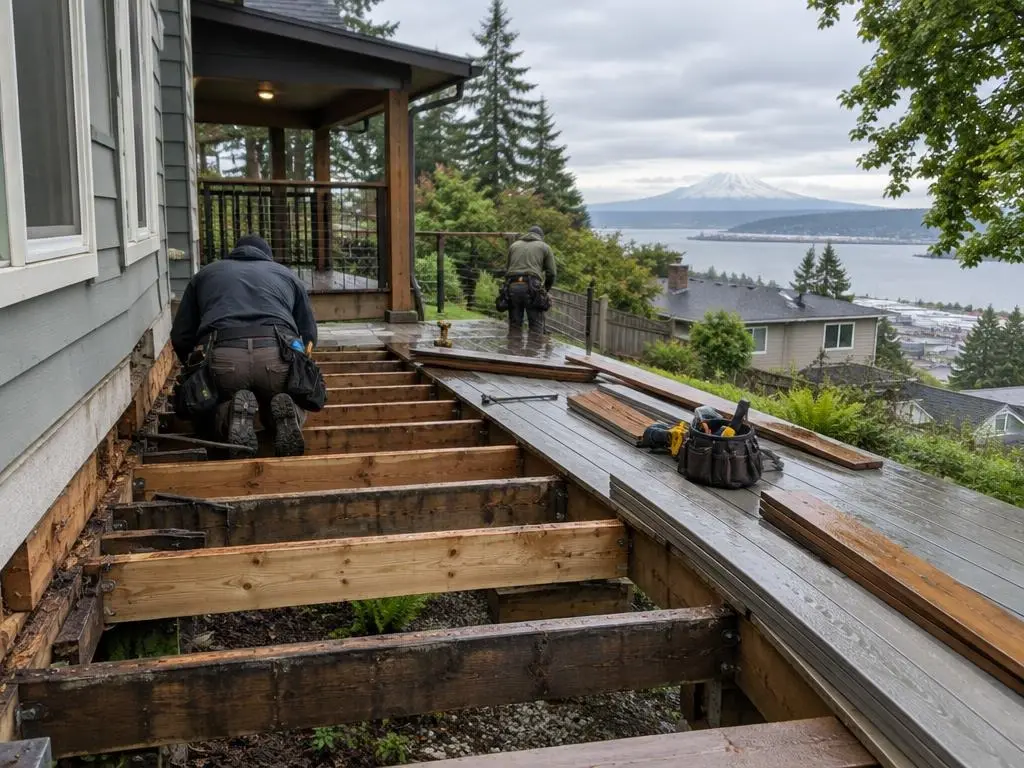
Composite boards usually call for joists spaced closer together than wood decking, often 16 inches on center or less, and closer still for diagonal patterns. We use ground-contact rated lumber for posts and framing, put joist tape on the tops of joists so water cannot sit in the fastener holes, flash the ledger where it meets the house, and use hangers and screws rated for treated wood. Posts stand on concrete footings with standoff bases so their end grain stays out of standing water.
Algae and shade
Composite will not rot, but it is not immune to the Northwest. In shade and under firs, a green film of algae or mildew can grow on the surface, and needles and leaves trapped between boards hold moisture. Keeping board gaps clear, choosing a capped board and washing the deck once or twice a year with a cleaner the manufacturer approves keeps it looking right. Darker colors also show pollen and dust less than very light ones.
Heat, color and fading
Tacoma summers are mild, so the heat that can make dark composite uncomfortable in hotter climates is less of an issue here, but dark boards in full sun can still get warm in July and August. Capped boards resist fading better than older uncapped products. We bring samples to the estimate so you can see colors in your own light.
Hidden fasteners and board layout
Most capped composite boards are installed with hidden clip fasteners that sit in a groove along the board edge, leaving a clean surface with no screw heads. The clips also set a consistent gap for drainage. Picture-frame borders, where a row of boards runs around the edge, hide the cut ends and give a finished look. Composite expands and contracts with temperature more than wood does, so gaps at the ends of boards follow the manufacturer's instructions.
Manufacturer warranties
Composite brands back their boards with limited residential warranties; Trex, for example, states that its decking and railing carry limited residential warranties ranging from 25 to 50 years, depending on the product. Those warranties cover the boards, usually require installation to the manufacturer's instructions, and do not cover the wood framing underneath. We follow the installation guide for the product you choose.
What This Covers
A composite deck project covers the structure, the surface and the edges.
Capped composite decking
Wood-plastic core boards with a protective polymer shell, in a range of colors and grain patterns.
PVC decking
All-polymer boards for very damp or shaded yards and the highest moisture resistance.
Framing and footings
Ground-contact treated framing on concrete footings, with joist tape and flashed ledgers.
Fascia, borders and trim
Matching fascia boards and picture-frame borders that cover cut ends and framing.
Hidden fasteners
Edge clips that leave a clean surface and keep drainage gaps consistent.
Typical Composite Deck Costs
| Item | Published range |
|---|---|
| Composite deck, installed (Angi) | $25 to $54 per sq ft |
| Composite deck, installed (Forbes Home) | $25 to $45 per sq ft |
| Capped composite, installed | $30 to $60 per sq ft |
| PVC decking, installed | $40 to $70 per sq ft |
| 10x20 composite deck (200 sq ft) | $5,000 to $9,000 |
| 20x20 composite deck (400 sq ft) | $10,000 to $18,000 |
Published national ranges from Angi (2026) and Forbes Home. Prices in the Tacoma and Puget Sound area can differ from national averages, and height, slope, access, railings and stairs change the total. Your written estimate is the price.
How It Works
1. Site visit
We measure, check the slope and house framing, and bring board samples.
2. Design and quote
You get a drawing and an itemized quote for boards, framing, railings and stairs.
3. Permit
We submit drawings and schedule footing, framing and final inspections.
4. Build and walk-through
Footings, frame, boards and trim go in, then we walk the deck with you.
Composite Deck Building Questions
How much does a composite deck cost in Tacoma?
National guides put composite decks at about $25 to $54 per square foot installed (Angi) or $25 to $45 (Forbes Home), with a 20x20 deck around $10,000 to $18,000. Height, the board line you choose, railings and stairs move the total. We give you a written price after seeing the site.
Does composite decking get slippery or mossy in the rain?
Composite can grow a film of algae in shade, and any wet deck surface can be slick. Capped boards with a textured grain, clear drainage gaps and a cleaning once or twice a year help. Ask for samples so you can compare textures.
Can you put composite boards on my existing deck frame?
Sometimes. The frame has to be sound, and composite usually needs joists at 16 inches on center or closer. We probe the ledger, joists and posts first; if the frame is solid and spaced right, resurfacing can save money.
Is PVC worth the extra cost over composite?
PVC handles moisture best and is lighter, which can matter in very shaded, damp yards or on second-story decks. Capped composite is less expensive and works well for most Tacoma decks. We can price both in your quote.
How long does a composite deck last?
The boards are typically backed by manufacturer warranties of 25 years or more, but the deck's real life depends on the wood frame underneath. That is why we use ground-contact lumber, joist tape and flashing on every build.
Composite Deck Building Service Areas
- Deck Builders in Tacoma, WA
- Deck Builders in University Place, WA
- Deck Builders in Fircrest, WA
- Deck Builders in Lakewood, WA
- Deck Builders in Gig Harbor, WA
- Deck Builders in Puyallup, WA
- Deck Builders in Fife, WA
- Deck Builders in Federal Way, WA
- Deck Builders in Steilacoom, WA
- Deck Builders in DuPont, WA
- Deck Builders in Sumner, WA
- Deck Builders in Bonney Lake, WA
- Deck Builders in Spanaway, WA
- Deck Builders in Parkland, WA
- Deck Builders in Edgewood, WA
- Deck Builders in Milton, WA
- Deck Builders in Auburn, WA
- Deck Builders in Graham, WA
Get a Composite Deck Building Estimate
Free estimates for composite deck building.